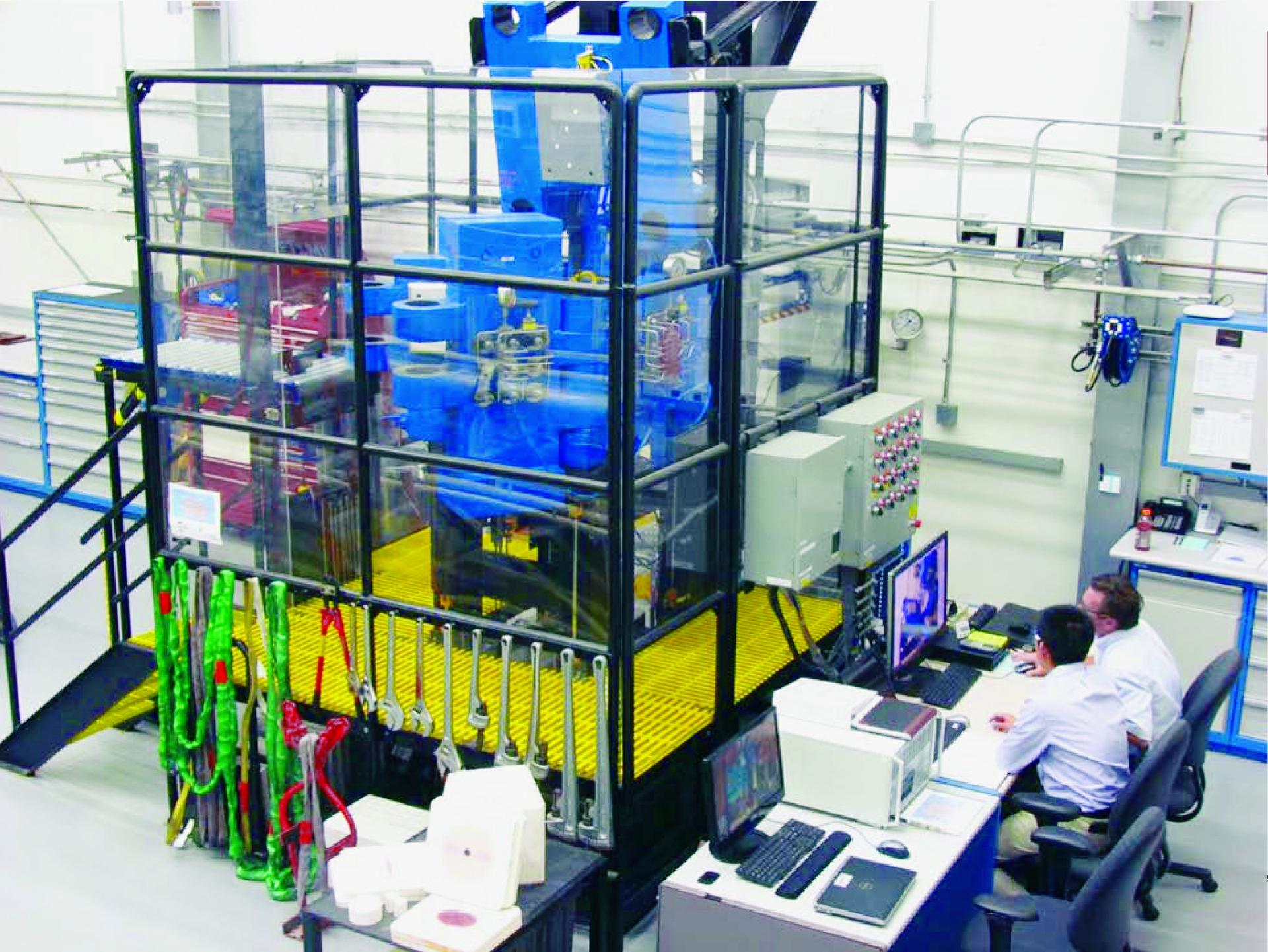
In just the last decade, the outlook for clean-burning natural gas as a major contributor to meeting global demand for energy has dramatically changed. In 2000, shale gas represented just one percent of natural gas supplies in the U.S., for example. Today that figure is 30 percent and rising.
Why? Because innovative solutions, developed from technologies long used by oil and gas companies, are now being applied successfully to unconventional resources like shale rock as well. This subsurface work is filled with all kinds of technical challenges that require detailed insights and understanding of the complex physics involved. One major company taking a leadership role in the use of simulation to power such innovation is ExxonMobil.
ExxonMobil was an early licensee (in the late 1970s) of Abaqus software in the energy sector. The relationship was more than simply commercial—ExxonMobil was also an early collaborator with SIMULIA on technology development to enable simulation of key energy-sector performance challenges. For example, collaboration with ExxonMobil led to the very first large sliding displacement capability in Abaqus. This technology was used to increase pressure and temperature capacity as well as reliability of threaded-pipe production tubulars and equipment.
Bruce Dale, Chief Subsurface Engineer for ExxonMobil, first described his company’s three-plus decades’ collaboration with SIMULIA and its predecessors during a keynote speech at the 2010 SIMULIA Community Conference. Shortly after that speech, his engineering team embarked on a new effort with SIMULIA to further strengthen simulation capabilities that would help address the many challenges involved in subsurface extraction of shale gas. This collaboration would concentrate on the development of stateof-the-art general purpose material models, finite element technology, and computational procedures aimed at identifying working solutions to such challenges.
The team consisted of senior engineers at ExxonMobil partnering directly with SIMULIA personnel. In particular, Kevin Searles played a significant role in establishing the key technical underpinnings and advising the joint development collaborative steering team since its inception. Also important has been the sustained ExxonMobil management leadership of Bill Kline, Jason Burdette and Erika Biediger over the duration of the joint project. (See sidebars for profiles of contributors.)
At this year’s SCC in Berlin, Dale returned to provide a fascinating in-depth look at just how far the joint partnership with SIMULIA has progressed and how sophisticated the resulting capabilities have become over the last five years. In addition to the SCC, the ExxonMobil team is rolling these technologies out at oil and gas technical events as well.
“This collaborative effort between ExxonMobil and SIMULIA has led to the development of fundamental improvements in simulation to address key drilling, completion and production challenges in the oil and gas industry,” said Dale. “Advanced simulation technologies and 3D visualization play an increasingly vital role in the success of the energy industry and include such modeling capabilities as finite element analysis (FEA), computational fluid dynamics (CFD) and particle flow dynamics (PFD).”
Dale has been a participant in this effort since the start of his career with Exxon in the 1980s, beginning with research and development supporting the drilling business and moving into management and leadership roles over time. He is a champion of new “game changing” technologies; and fostered innovation, creativity and excellence throughout his 34-year professional career. “I had an opportunity early on to work with Abaqus, part of the Dassault Systèmes SIMULIA suite of tools, and that was a great way to apply advanced technology to simulate those things which, in the past, we’d only been able to test in the laboratory or in the field,” he said, in an interview after his 2015 talk.
Employing simulation at ExxonMobil has increased the company’s competitiveness, Dale said. “The power of being able to connect the dots is one you’re never able to do fullyin the laboratory because of cost, size and time,” he said. “In the past, the time available often wouldn’t fit within the period where decisions had to be made.
“The visualization now possible with simulation allows you to do the interpretation—to spot either opportunities or flaws—a lot earlier. This impacts and affects the here and now much more so than ever before. So in the upstream business, visualization is a great aid, able to bring folks together with disparate types of information analyses and data to solve some very tough challenges.”
In his 2015 SCC address, Dale discussed his company’s commitment to developing natural gas resources in a safe and reliable manner. ExxonMobil has developed best management practices to increase efficiencies while reducing the overall environmental footprint, he said. This includes protecting local ground water resources, working closely with communities and government and promoting transparency and efficient regulation.
Dale explained that extracting natural gas from shale rock involves the complex physics of
Drilling (creating a useable borehole)
Completion (providing a conduit from the reservoir to the surface)
Stimulation (enhancing the connectivity of the well to the reservoir rock face)
Production (managing the flow of reservoir fluids through the well, treating facilities and piping systems)
and Waste Disposal (re-injection of untreatable fluids safely back into deep subsurface horizons)